The Teacher Guide:
An Overview
The MothEd Teacher Guide represents a comprehensive pathway that teachers can follow to implement the MothEd curricular materials in their classroom. From planning and preparation, to trapping and analysis, the Guide features a scaffolded set of student-centered activities that can be used throughout the upper elementary, middle, and lower secondary school levels.
In addition to classroom guidance, we also provide dedicated information for parents and school administrators, highlighting the educational value of MothEd and the benefits of using it in your classroom.
Act 1:
Act 1 of MothEd Teacher Guide includes two phases: Plan and Introduce. This act is all about setting the stage—for teachers and students alike.
The Plan phase is for instructors. It provides an overview of the MothEd curriculum and supports teachers in deciding how best to integrate the unit into the scope and sequence of their existing curriculum.
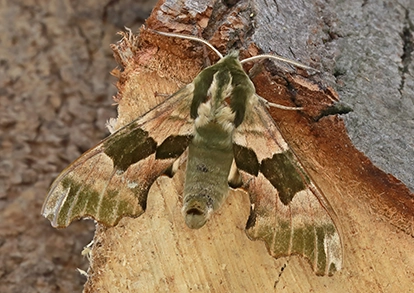
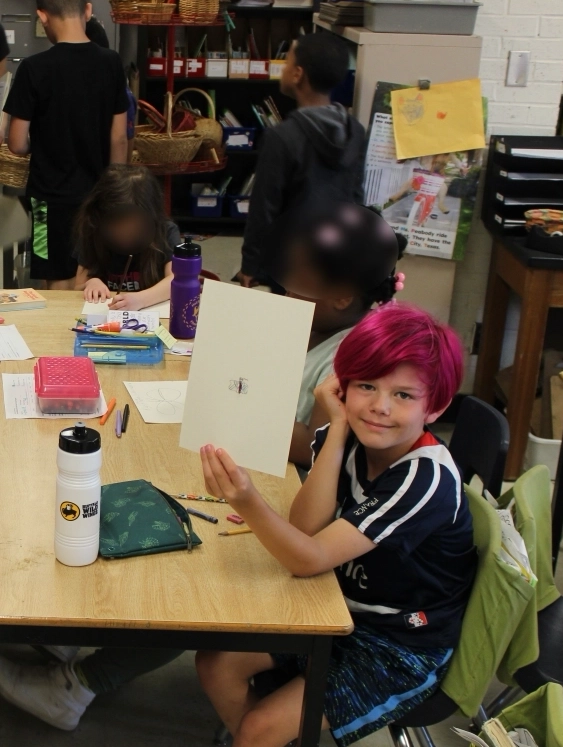
In the Introduce phase, students begin building foundational knowledge about moths and their ecological roles. Through interactive lessons and hands-on activities, they explore moth anatomy, life cycles, and the ways moths influence both human systems and natural ecosystems. Just as importantly, students start asking their own questions—cultivating a sense of curiosity that lays the groundwork for authentic scientific investigation.
Act 2:
Act 2 of the MothEd Teacher Guide includes two phases: Design and Collect. This act moves students from curiosity to action, equipping them with the tools and strategies needed to carry out their own scientific investigations.
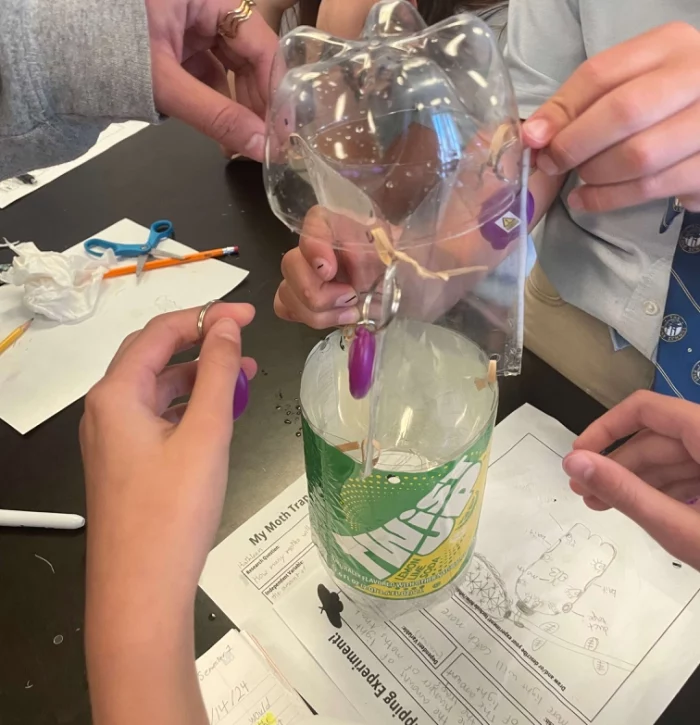
The Design phase engages students in engineering and experimental thinking. They build their own moth traps, drawing on knowledge of moth behavior and ecological principles, and begin developing testable research questions.
In the Collect phase, students implement their experiments by deploying traps and gathering data. They engage in hands-on practices like sorting moths, developing classification systems, and learning how to pin specimens.
Act 3:
Act 3 of the MothEd Teacher Guide involves three phases: Analyze, Summarize, and Share. This act guides students through the final stages of the scientific process—making sense of their data, reflecting on what they’ve learned, and communicating their findings to others.
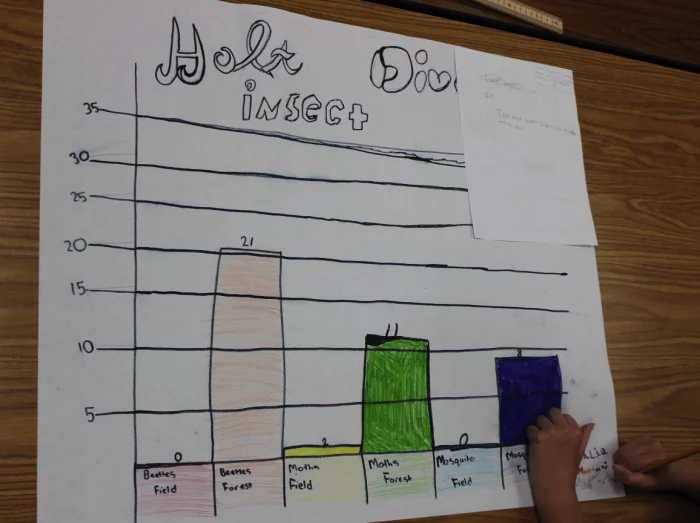
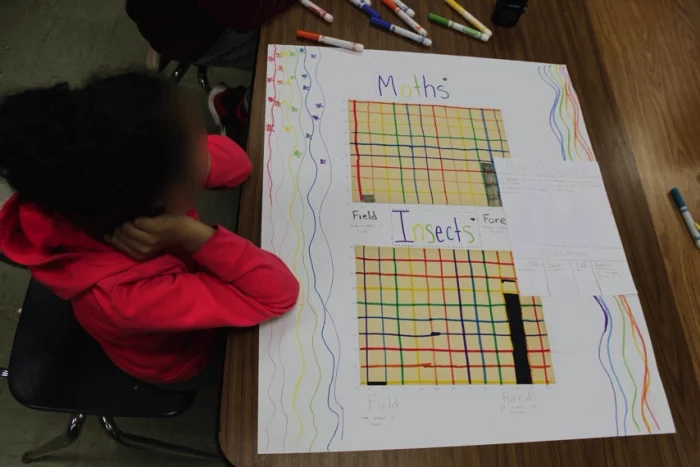
In the Analyze phase, students dig into the data they’ve collected. Using summary statistics and graphs, they begin identifying patterns and drawing conclusions related to their original research questions. Whether working with paper or digital tools—or within the CLUE platform—students learn how to transform raw observations into interpretable results.
The Summarize phase brings students back to their initial hypotheses. Here, they determine whether their data supports or refutes their predictions and reflect on the strengths and limitations of their experimental designs. Just as importantly, students are encouraged to generate new questions, reinforcing the idea that science is an ongoing, iterative process.
Finally, in the Share phase, students prepare to communicate their findings. Through posters, presentations, or digital media, they craft compelling stories about their experiments and their results—sharing their work with classmates, teachers, families, and even broader communities.