The History of MothEd
MothEd began with a simple idea: What would happen if students led their own investigations of the moths in their own communities and neighborhoods?
What started as a grassroots pilot evolved into a full-fledged nationally-funded project grounded in real research, community engagement, and national science standards. Read the story, below.
The Story of MothEd
Curious about where MothEd came from? It all started with a conversation.
In 2016, Pete White, a professor of Entomology, and David Stroupe, a professor of Science Education, were introduced through Science and Society at State, an initiative at Michigan State University designed to spark interdisciplinary collaborations. Pete brought to the table a deep passion for moth ecology and biodiversity, while David was immersed in the world of ambitious, student-centered K–12 science education. The question they posed together was simple but powerful: Could kids become authentic investigators of the natural world through the study of moths?
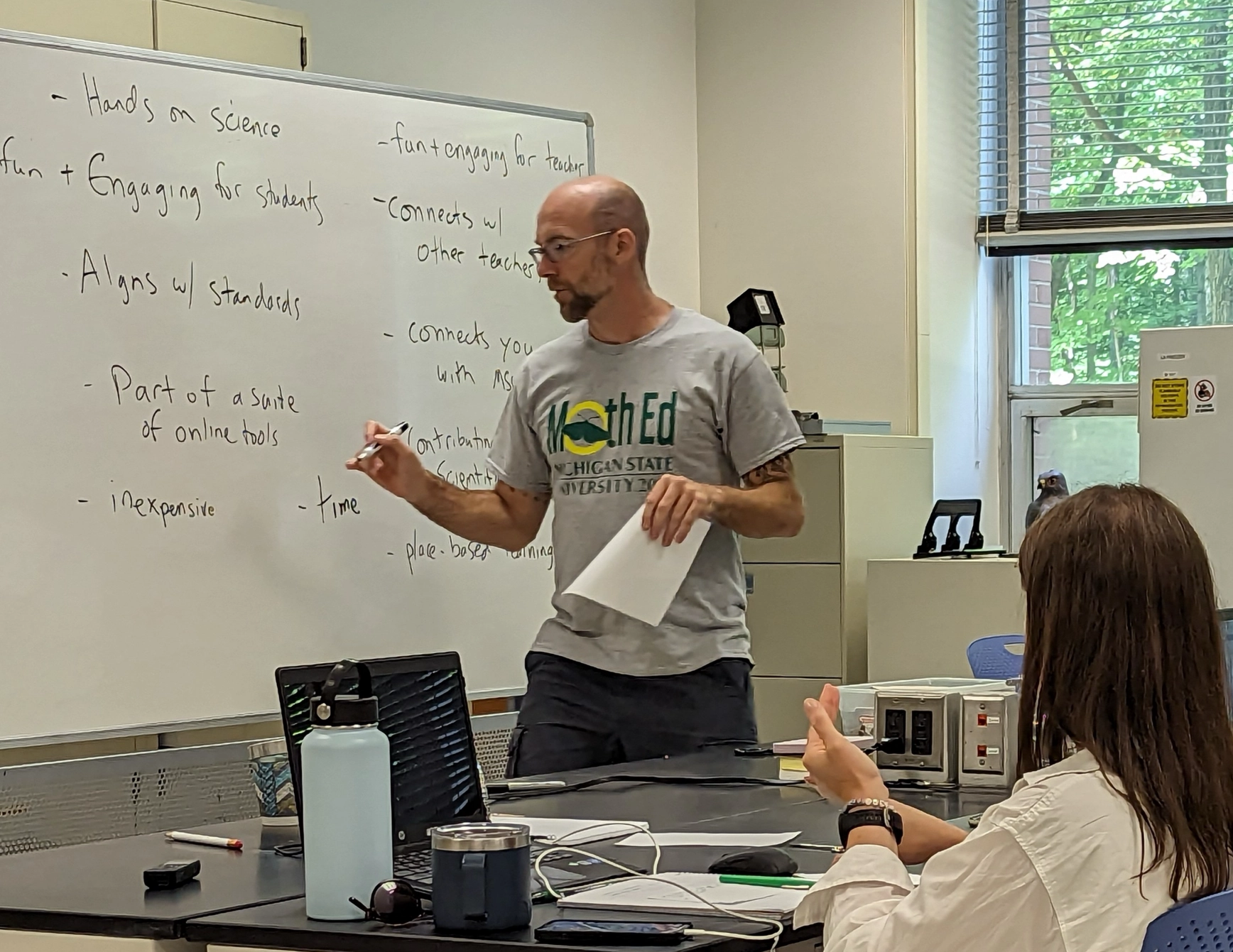
With the help of a local 6th-grade teacher at MacDonald Middle School in East Lansing, they piloted a 4-week unit where students built traps, captured moths, identified species, and began asking their own questions about the unseen ecological webs all around them. The response was immediate and electric: students who had never paid attention to insects became absorbed by the mysterious diversity of moths fluttering around their homes and schools. Some began asking novel research questions; others took pride in contributing to a collective data set. It didn’t take long to realize that this wasn’t just a one-off project—it had the potential to be something much more.
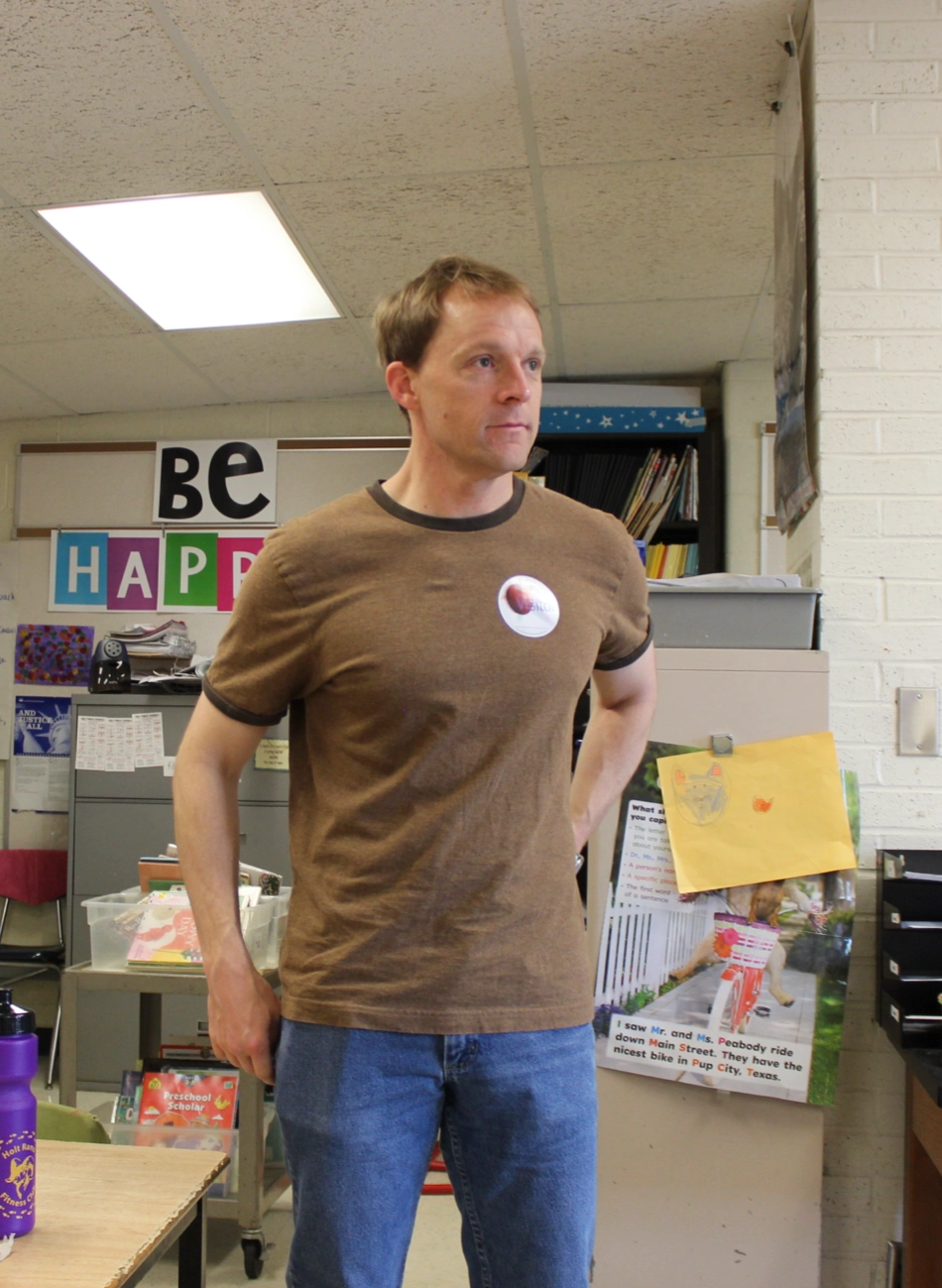
Pete and David expanded the curriculum to see whether it could work across grade levels. Implementations at Sycamore Elementary and Hope Middle School in Holt, MI, showed that even 2nd and 5th graders could meaningfully engage with real scientific practices when given the tools and freedom to explore. Students, even at young ages, weren’t just learning about science—they were doing it.
By 2019, the idea of turning MothEd into a scalable, national resource was gaining traction. But to truly realize that vision, the team needed partners with expertise in educational technology. That led to a partnership with the Concord Consortium, a nonprofit known for building interactive STEM learning tools that center student engagement and authentic inquiry. In 2021, the team secured support from the National Science Foundation to develop a fully interactive version of MothEd, accessible to teachers and classrooms across the country.
A key outcome of this work is CLUE—the Collaborative Learning User Environment. CLUE is more than just a digital notebook. It’s an immersive, collaborative space where students can log their moth captures, analyze class-wide data, and publish their findings. It encourages students to make sense of real data collected from their own communities, and to contribute to shared classroom investigations over days, weeks, or even an entire school year.
Throughout this journey, MothEd has remained grounded in its original vision: that kids of all ages, in all kinds of classrooms, can do real science. And as the project continues to grow, our aim is clear—to make MothEd an accessible, flexible, and inspiring resource that helps young people across the country experience the thrill of authentic scientific discovery, right outside their own doors.